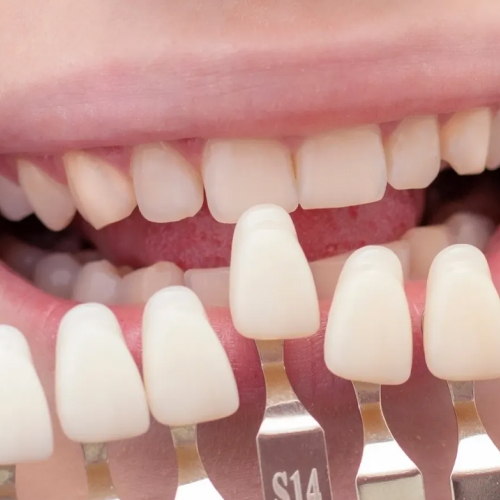
Are No-Prep Veneers Really Better and What Are the Hidden Risks?
Wondering if no-prep veneers are better for your smile? Learn the hidden risks, downsides, and oral health facts. Read our expert guide before deciding!
Read More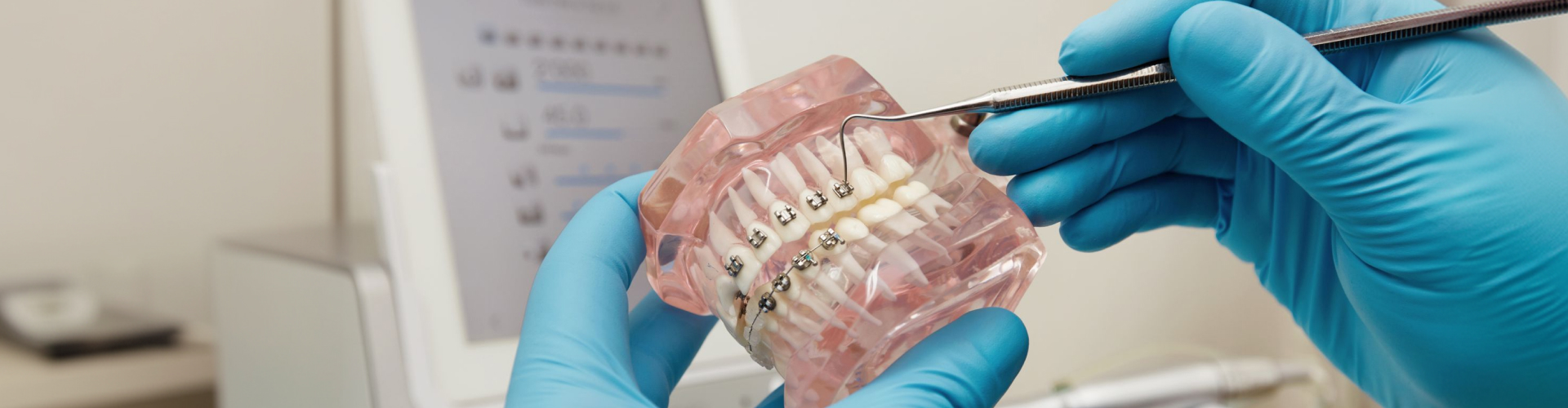
Adult orthodontic treatment involves more than a single quoted number — tiers, contract structures, and pre-treatment dental prep all shape what you actually experience. Understanding these layers helps you ask better questions before signing anything.
For Cypress-area adults considering treatment, when a provider quotes a low estimate for Invisalign, many adults assume they're getting the full treatment at a discount. That's rarely what's happening.
Invisalign is sold to providers through a tiered system based on case complexity and the number of aligners included. The entry-level tiers — sometimes called Express or i7 — are designed for minor cosmetic corrections involving only a handful of trays. These are appropriate for slight relapse after previous orthodontic treatment, not for meaningful bite correction or moderate crowding.
The mid-range tiers (Lite and Moderate) cover more movement but still cap the number of trays. Comprehensive is the only tier with unlimited refinements and the full range of tooth-movement capability.
Here's where the hidden exposure comes in: if a provider quotes a Lite or Express case and your teeth don't respond as projected — or if the initial assessment underestimates your case complexity — you may need to upgrade mid-treatment. That upgrade is a separate adjustment. Patients who started expecting a clean finish sometimes end up needing a partial series and a Comprehensive restart.
According to Healthline, Invisalign is well-established with over 20 years of history, uses high-quality materials, and achieves good results — but providers may prefer other approaches for more complex issues like overbite correction.
The takeaway: ask your provider explicitly which Invisalign tier your treatment plan uses, how many trays are included, and what the upgrade policy is if refinements exceed that allotment.
Children starting braces typically have healthy gum tissue and no prior restorations. Adults rarely do.
Active periodontal disease — even mild bone loss that shows no obvious symptoms — must be stabilized before orthodontic forces are applied. Moving teeth through inflamed tissue accelerates bone loss and can result in permanent damage. This means many adults require scaling and root planing (a deep cleaning procedure) before brackets are bonded or aligners are delivered. That's a separate dental appointment, handled separately from orthodontic treatment. Adults with signs of gum disease gingivitis should have this addressed before any orthodontic work begins.
Beyond periodontics, adults often have crowns, veneers, or large fillings on the teeth that need to move. Standard bracket adhesive doesn't bond well to porcelain or certain composite materials. Providers may need to use specialized bonding primers or modify existing restorations for each affected tooth.
WebMD notes that adults can have more pre-existing dental issues than children — including receding gum lines and misshapen teeth — and that the realignment process may take longer as a result.
Ankylosed teeth (teeth fused to the jawbone that don't respond to orthodontic pressure) may require a tooth extraction before treatment can proceed. This isn't common, but it isn't rare in adult patients either.
None of these prep procedures typically appear in an orthodontic quote. They're handled through your general or periodontal dental provider, which means the full clinical picture for adult orthodontics is spread across multiple providers.
Orthodontic practices structure their contracts in two fundamentally different ways, and the difference is rarely explained upfront.
A global fee contract covers the complete course of treatment: records, appliances, adjustments, mid-course refinements, and the initial retention phase. You agree to a complete plan and the practice manages treatment adjustments as needed.
An unbundled contract presents a narrower baseline scope but handles milestones separately. Common line-item exclusions in sub-threshold agreements include:
The retention phase alone deserves scrutiny. Healthline explains that after Invisalign treatment is complete, patients continue wearing a retainer to ensure teeth stay in their corrected position — without one, teeth may shift back toward their original alignment. Retainers are not optional. If they're not included in your contract, they are an additional step to account for.
When comparing treatment options, ask each provider to itemize what is and isn't included. A global contract that covers refinements and retention through year one may provide a clearer complete plan than an agreement that schedules each of those elements separately.
A Healthline overview of adult braces points out that adults have more orthodontic options than ever — conventional metal, ceramic, lingual, and clear aligners — with aesthetics, lifestyle, and case complexity all influencing the right choice.
Adults should also understand that treatment timelines are generally longer than for adolescents. WebMD reports that braces work faster when jawbones are still growing during childhood, but that teeth continue to shift with age — meaning treatment is effective at any stage of life, just at a different pace. Fully formed adult bone density means teeth move more gradually under the same orthodontic force.
Ceramic braces offer a subtler appearance than metal but come with tradeoffs: they're more prone to fracture, the brackets are larger (which can complicate gum hygiene), and the elastic ties can stain. Lingual braces — bonded to the back of teeth — are nearly invisible but are more technically demanding to place, which affects treatment complexity. Adults exploring teeth straightening braces should discuss all available options with their provider to find the best fit for their clinical needs and lifestyle.
For adults balancing professional visibility with clinical need, clear aligners remain the most popular choice. The commitment, though, is real: Healthline's overview of Invisalign effectiveness notes that aligners must be worn 20 to 22 hours per day to work as intended, and that skipping wear time directly extends treatment duration.
The right orthodontic approach depends on your specific bite, existing dental work, periodontal health, and lifestyle.
If you're in Cypress or the North Orange County area and weighing your orthodontic options, the right starting point is a comprehensive evaluation — not a ballpark figure from a comparison site.
Cypress Family Dental can assess your full dental picture, identify any prep work needed before treatment begins, and help you understand exactly what's included in any treatment plan before you sign. A cleaning and exam is often the ideal first step to establish your baseline dental health before committing to any orthodontic plan. Reach out to schedule your consultation with our Cypress team.
Medical disclaimer: This article is for informational purposes only and does not constitute dental or medical advice. Consult a licensed dental professional for diagnosis and treatment recommendations specific to your situation.
Fresh news from the dental world



Mon - Fri 8AM - 5PM
Sat & Sun Closed
Check out what our patients are saying in Cypress...
..png)

“They're All Top Notch”
I'm so happy to have found this awesome dentist with an awesome staff. I am completely confident in the doctor's skill level, and completely comfortable relying on him to work on me without allowing me to experience unnecessary pain. In addition to having a good relationship with the dentist, being able to relate with the office staff is equally important to me. From the hygienist to the dental assistants to the front desk, they're all top notch.

“They Are So Efficient”
This is the best dentist I have been to and I have been to several. The team is professional and welcoming. They are never over-booked and I have never waited more than 5 minutes in the lobby. They are so efficient, no matter what I go in for, I am out in 45 minutes or less. I highly recommend Cypress Family Dental.

“A Very Pleasant Experience”
My visit to the Cypress Family Dental office today was a very pleasant experience. The front desk staff greeted me upon entering the office and efficiently confirmed my scheduled appointment. I'm seen within a short time by professional, knowledgeable and comfortable staff. They're open to various types of insurance and are flexible on terms. Overall, I would definitely recommend Cypress Family Dental.

“The Staff Did A Great Job”
Came to Cypress Family Dental a year ago for my sleep apnea device. No more snoring! The staff did a great job fitting me for this oral appliance. Better yet, they were there to support me when I needed some adjustments later on. The front office staff couldn't have been more accommodating to schedule me in. Easy to recommend.

“They Truly Care”
The dentist and his staff are wonderful people! In the past, I have had horrible experiences at other dentist offices and then I found this place and I don't think I would ever go anywhere else again. I live about 45 min away from their office but the drive is well worth it. They truly care about their patients. I would recommend this office to anyone.
..png)
“The Doctors Are Just Stellar”
The sweetest people work here, I'm convinced! The ladies at the front desk always go out of their way to be kind and helpful, the hygienists listen to your concerns and will address them to their best ability, and the doctors are just stellar. I drive over 40 min from where I live to go here because it's rare to find a dental office this fantastic.
“They're All Top Notch”
I'm so happy to have found this awesome dentist with an awesome staff. I am completely confident in the doctor's skill level, and completely comfortable relying on him to work on me without allowing me to experience unnecessary pain. In addition to having a good relationship with the dentist, being able to relate with the office staff is equally important to me. From the hygienist to the dental assistants to the front desk, they're all top notch.
“They Are So Efficient”
This is the best dentist I have been to and I have been to several. The team is professional and welcoming. They are never over-booked and I have never waited more than 5 minutes in the lobby. They are so efficient, no matter what I go in for, I am out in 45 minutes or less. I highly recommend Cypress Family Dental.
Check out our accreditations, sources, and relationships in the wide world of dentistry...


Check us out and follow our Cypress dental practice on social media...


