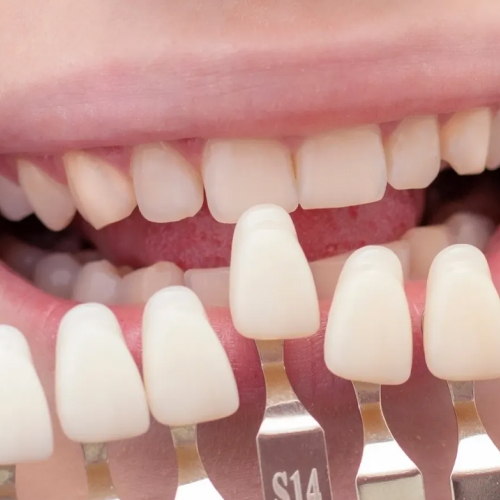
Are No-Prep Veneers Really Better and What Are the Hidden Risks?
Wondering if no-prep veneers are better for your smile? Learn the hidden risks, downsides, and oral health facts. Read our expert guide before deciding!
Read More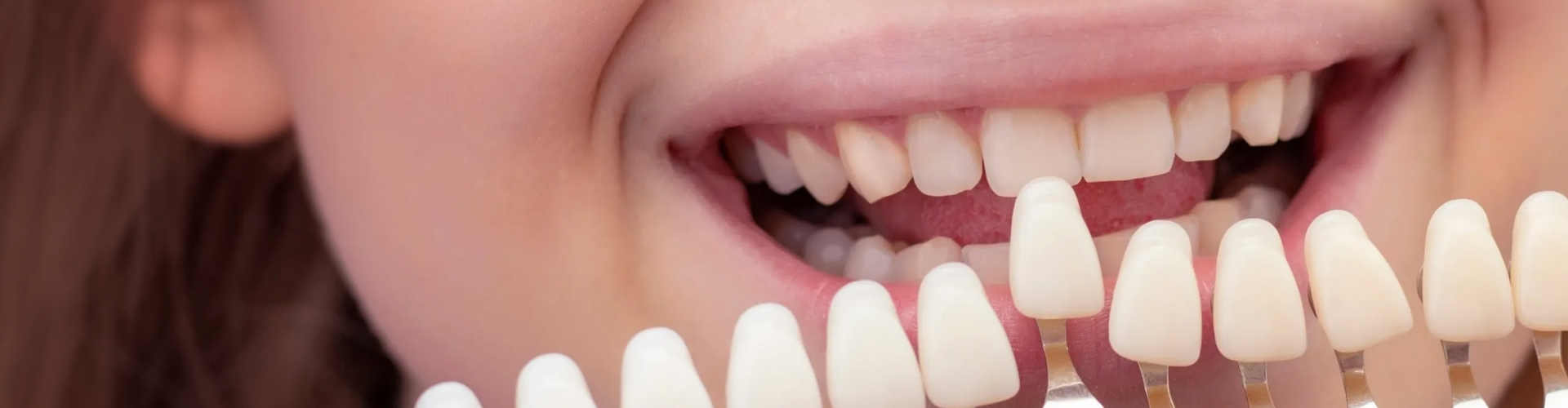
No-prep veneers promise a faster, reversible path to a better smile — but the clinical reality is more complicated. From optical limitations on dark teeth to the mechanics of removal, understanding the hidden risks helps you make a genuinely informed decision about porcelain veneers and other cosmetic options.
For Cypress-area patients, no-prep veneers are frequently marketed as a purely additive procedure — nothing is removed, so you can always go back to your natural teeth. That framing is misleading.
When a dentist bonds any veneer to your tooth, the surface must first be acid-etched. That etching opens up the enamel prisms at a microscopic level so the resin cement can lock in mechanically. High-strength resin cements embed deeply into that roughened surface. When the veneer is eventually removed — whether by choice or because it fails — the process requires rotary diamond burs or laser energy to clear the residual cement. That instrumentation inevitably creates micro-striations, causes enamel prism loss, and dulls the natural luster of the tooth underneath.
So while no enamel is deliberately shaved before placement, removal is not a clean, harmless undo. The tooth you get back is not identical to the tooth you started with. A Healthline overview of no-prep veneers acknowledges that while no-prep veneers are considered semi-permanent, they "can cause some damage to the surface of your tooth" during both installation and removal.
The honest framing: no-prep is less invasive upfront, not non-invasive overall.
One of the most common reasons patients pursue veneers is intrinsic discoloration — tetracycline staining, fluorosis, or a darkened tooth following root canal treatment. No-prep veneers sound like the ideal fix: cover the darkness without drilling. The optical physics make that promise very difficult to keep.
Cosmetic dentists generally work with the principle that approximately 0.2mm of porcelain thickness is needed to mask each shade tab change. A standard no-prep veneer is only about 0.3mm thick. That leaves almost no optical buffer against a significantly darkened substrate.
To compensate, dental labs can increase the opacity of the porcelain ingot used. But high-opacity ceramic blocks light transmission rather than scattering it the way natural enamel does. The result is a flat, uniform, almost plastic appearance — what clinicians sometimes call the "Chiclet" look. The alternative outcome is equally problematic: the dark shade bleeds through the translucent veneer, leaving the tooth visibly discolored even after treatment.
WebMD's guide to veneers notes that Lumineers and similar no-prep options "don't last as long as veneers" and are "not as effective at hiding severely stained or damaged teeth." For severe intrinsic staining, traditional porcelain veneers — which allow the lab to work with adequate thickness — produce far more reliable aesthetic outcomes. Patients who want to address surface-level discoloration before committing to veneers may also want to explore pro teeth whitening as a first step.
A question patients frequently ask is whether teeth can decay under no-prep veneers. The answer depends largely on something called the emergence profile — the contour of the tooth as it exits the gumline.
With traditional veneers, the dentist prepares a finish line (a chamfer or shoulder margin) directly on the tooth surface. The veneer is then fabricated to follow that contour seamlessly. With no-prep veneers, there is no carved finish line. A 0.3mm–0.5mm shell is added directly onto an unaltered tooth surface, creating a microscopic ridge or "shelf" right at the gumline. This is sometimes called marginal overhang or over-contouring.
That shelf disrupts the tooth's natural emergence profile and becomes a physical plaque trap. Even patients with excellent hygiene cannot reliably clean a sub-gingival ledge. Over time, bacterial accumulation at the margin drives cervical microleakage — the gradual infiltration of bacteria and fluids between the veneer and the tooth — as well as chronic localized gum disease gingivitis in the surrounding tissue.
Mouth Healthy from the American Dental Association emphasizes that proper fit and bonding technique are critical for veneer success, and that only a licensed dentist should place veneers — in part because improper placement over unhealthy or poorly contoured teeth creates compounding risks. This is why a thorough clinical evaluation before any veneer placement matters far more than the brand name on the shell.
Despite the limitations above, no-prep veneers are a legitimate option for the right candidate. Healthline's comparison of veneers and Lumineers outlines that no-prep options work well for patients whose teeth are already close to the desired shade and shape — people correcting minor gaps, slight irregularities, or mild surface discoloration rather than significant structural or color problems.
The strongest candidates typically have:
A Healthline overview of composite veneers reinforces that the severity of the issue being corrected should drive the treatment choice — not the appeal of a faster or less invasive procedure.
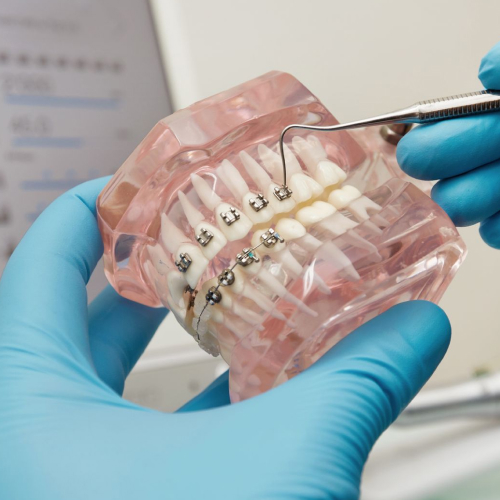
For patients with darker teeth, significant chips, worn enamel, or gum sensitivity, traditional porcelain veneers or composite alternatives are usually the more durable and aesthetically reliable path. In some cases, patients with more significant alignment concerns may also benefit from exploring teeth straightening braces or Invisalign before committing to a veneer treatment plan.
The veneer decision is more nuanced than most marketing makes it seem. If you're in Cypress or the surrounding North Orange County area and want an honest evaluation of whether no-prep veneers, traditional porcelain veneers, or another cosmetic option is the right fit for your smile, Cypress Family Dental is here to help. Our team will assess your tooth shade, enamel health, and gumline contour before recommending any treatment — because the best veneer is the one that actually works for your specific teeth. We also recommend scheduling a cleaning and exam beforehand to ensure your teeth and gums are in optimal condition for any cosmetic procedure.
This article is intended for informational purposes only and does not constitute dental or medical advice. Please consult a licensed dental professional for diagnosis and personalized treatment recommendations.
Fresh news from the dental world



Mon - Fri 8AM - 5PM
Sat & Sun Closed
Check out what our patients are saying in Cypress...
..png)

“They're All Top Notch”
I'm so happy to have found this awesome dentist with an awesome staff. I am completely confident in the doctor's skill level, and completely comfortable relying on him to work on me without allowing me to experience unnecessary pain. In addition to having a good relationship with the dentist, being able to relate with the office staff is equally important to me. From the hygienist to the dental assistants to the front desk, they're all top notch.

“They Are So Efficient”
This is the best dentist I have been to and I have been to several. The team is professional and welcoming. They are never over-booked and I have never waited more than 5 minutes in the lobby. They are so efficient, no matter what I go in for, I am out in 45 minutes or less. I highly recommend Cypress Family Dental.

“A Very Pleasant Experience”
My visit to the Cypress Family Dental office today was a very pleasant experience. The front desk staff greeted me upon entering the office and efficiently confirmed my scheduled appointment. I'm seen within a short time by professional, knowledgeable and comfortable staff. They're open to various types of insurance and are flexible on terms. Overall, I would definitely recommend Cypress Family Dental.

“The Staff Did A Great Job”
Came to Cypress Family Dental a year ago for my sleep apnea device. No more snoring! The staff did a great job fitting me for this oral appliance. Better yet, they were there to support me when I needed some adjustments later on. The front office staff couldn't have been more accommodating to schedule me in. Easy to recommend.

“They Truly Care”
The dentist and his staff are wonderful people! In the past, I have had horrible experiences at other dentist offices and then I found this place and I don't think I would ever go anywhere else again. I live about 45 min away from their office but the drive is well worth it. They truly care about their patients. I would recommend this office to anyone.
..png)
“The Doctors Are Just Stellar”
The sweetest people work here, I'm convinced! The ladies at the front desk always go out of their way to be kind and helpful, the hygienists listen to your concerns and will address them to their best ability, and the doctors are just stellar. I drive over 40 min from where I live to go here because it's rare to find a dental office this fantastic.
“They're All Top Notch”
I'm so happy to have found this awesome dentist with an awesome staff. I am completely confident in the doctor's skill level, and completely comfortable relying on him to work on me without allowing me to experience unnecessary pain. In addition to having a good relationship with the dentist, being able to relate with the office staff is equally important to me. From the hygienist to the dental assistants to the front desk, they're all top notch.
“They Are So Efficient”
This is the best dentist I have been to and I have been to several. The team is professional and welcoming. They are never over-booked and I have never waited more than 5 minutes in the lobby. They are so efficient, no matter what I go in for, I am out in 45 minutes or less. I highly recommend Cypress Family Dental.
Check out our accreditations, sources, and relationships in the wide world of dentistry...


Check us out and follow our Cypress dental practice on social media...


